Memory Scaffolding
Memory Scaffolding is composed of eleven panoramic fragments generated of the 360-degree scan of Maurice Harron’s Hands Across the Divide. Arranged across two thirty-metre-long prints, the fragments transform the scanning process into a linear narrative.

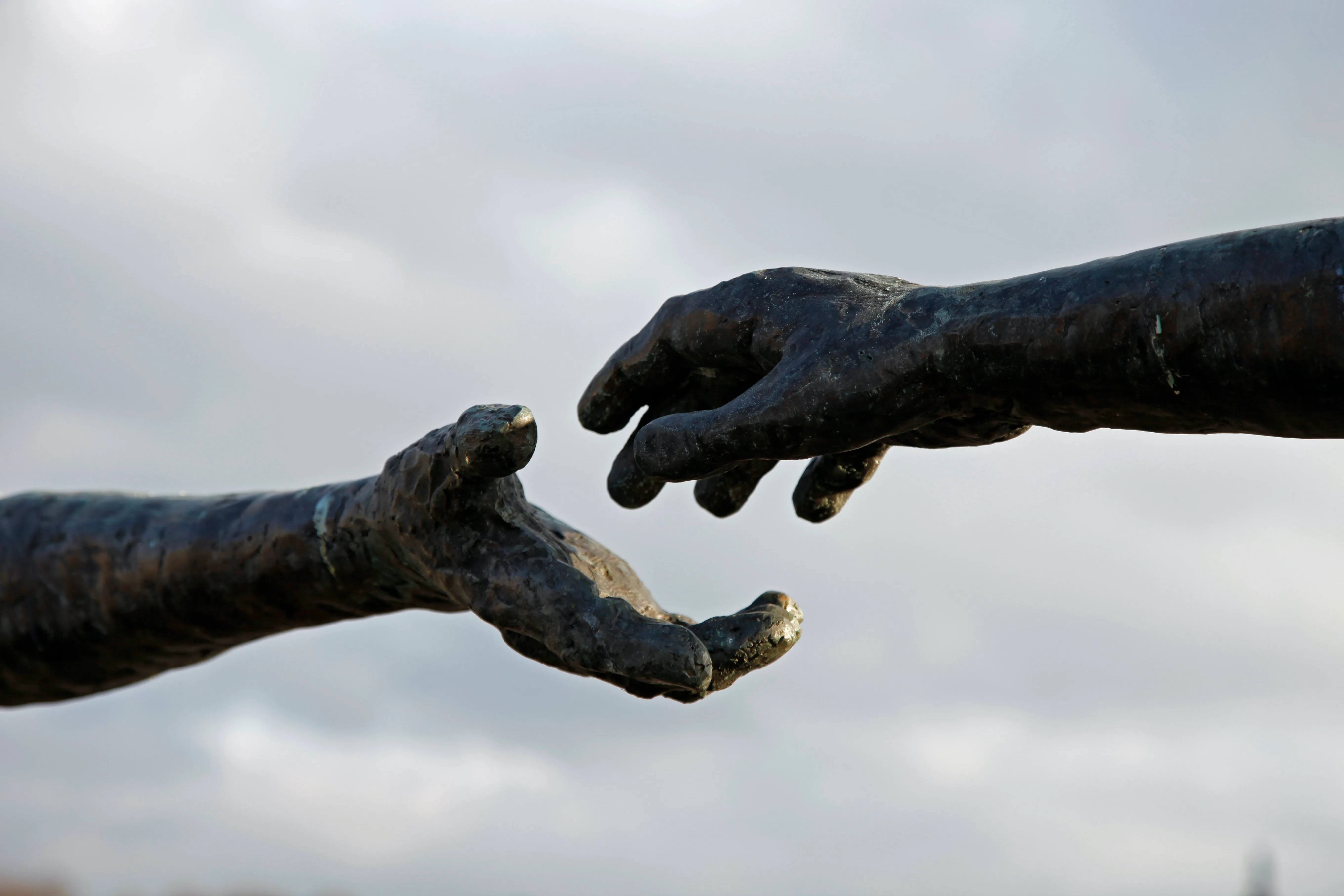


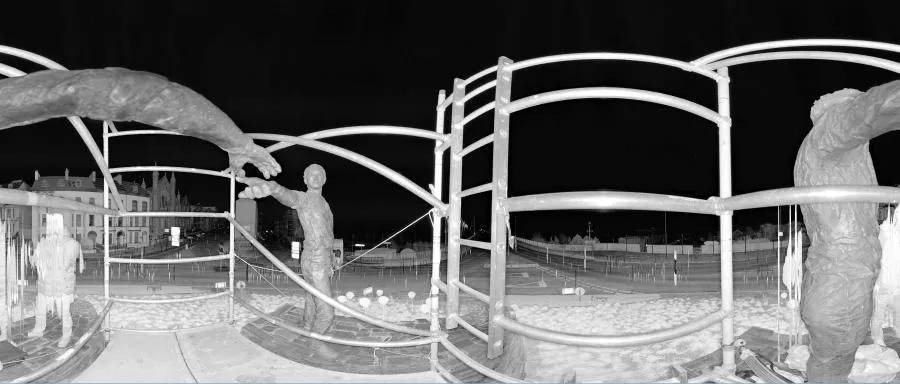
As the scanner moves around the sculpture, it does not preserve the monument as a single, stable image. Figures stutter and repeat, surfaces stretch, and the two bodies remain recognisable yet distorted. Their hands are particularly unsettled: across the sequence, one appear streched to approach, the other miss, one separate, and the other return. A technology intended to produce a precise three-dimensional model instead records an oscillation between proximity and distance.
The title treats memory as a structure that cannot stand unsupported. Like scaffolding, collective memory is assembled, maintained, and continually revised. The work presents remembrance not as a fixed account of the past, but as a provisional framework through which history is repeatedly reconstructed.
