On the Ropes
Forms of modern life may differ in quite a few respects – but what unites them all is precisely their fragility, temporariness, vulnerability and inclination to constant change. To ‘be modern’ means to modernise – compulsively, obsessively; not so much just ‘to be’, let alone to keep its identity intact, but forever ‘becoming’, avoiding completion, staying underdefined. (…) 'Liquid modernity' is the growing conviction that change is the only permanence, and uncertainty the only certainty. _Zygmunt Bauman
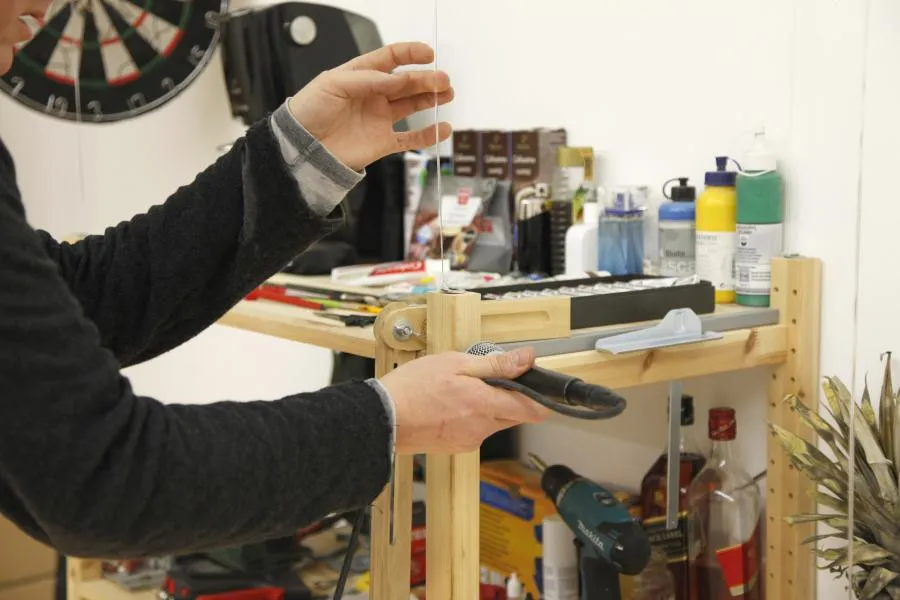
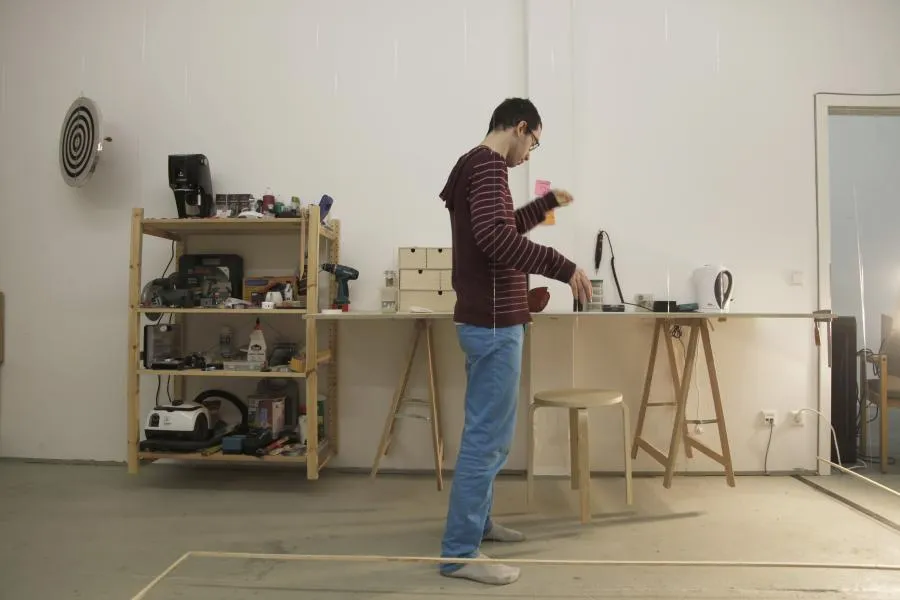
On the Ropes began in Barakeh’s studio apartment, where he both lived and worked. Every object and piece of furniture was raised fifteen centimetres above the floor and suspended by transparent monofilament. Opened to the public, it became a walk-through installation that translated an internal state of anxiety into a physical condition.
The work emerged from personal and collective experience of repeated relocation and instability. Drawing on Zygmunt Bauman’s concept of “liquid modernity,” it connects the particular conditions of displacement and precarious cultural labour to wider contemporary structures: temporary housing, insecure work, social dislocation, and the demand to remain permanently adaptable.
The title operates both literally and idiomatically. The studio hangs from near-invisible lines, while being “on the ropes” means enduring pressure or standing close to defeat. A familiar domestic space becomes a suspended psychological landscape.
On the Ropes is an ongoing work that has been presented in Frankfurt, Berlin, and Paris so far. Each iteration reconstructs the original studio apartment in a new setting and is filmed. The resulting footage enters subsequent installations and videos, allowing the work to accumulate its own reenactments.
Suspension Scores
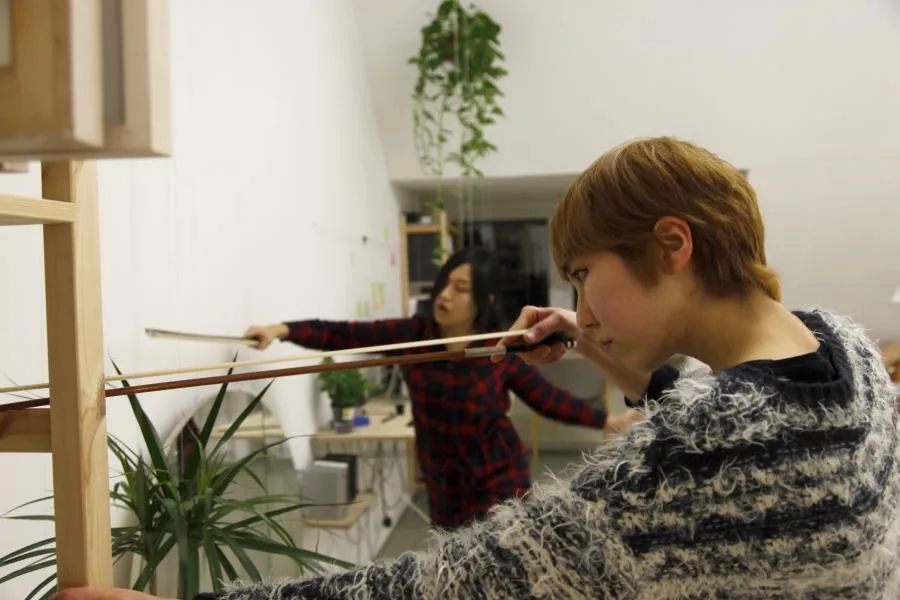
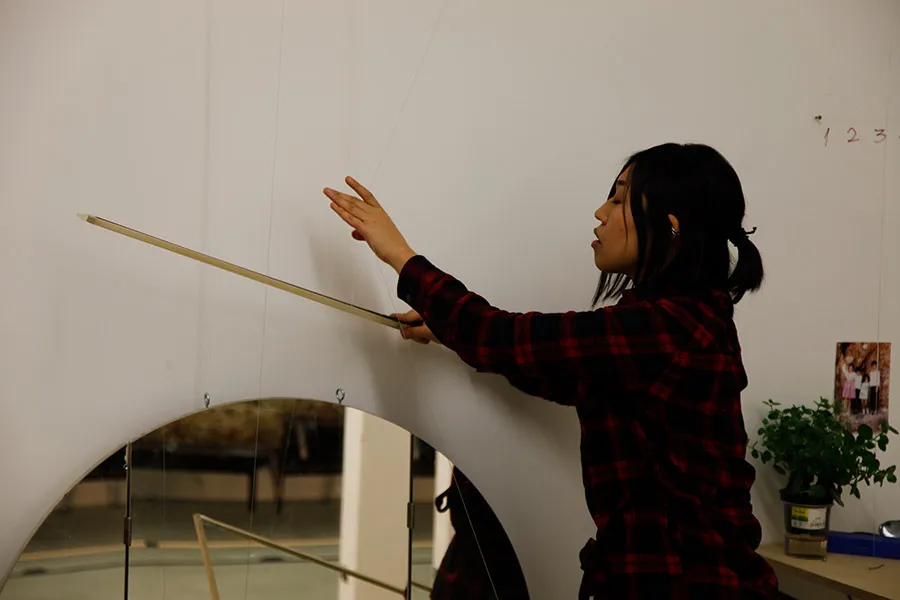
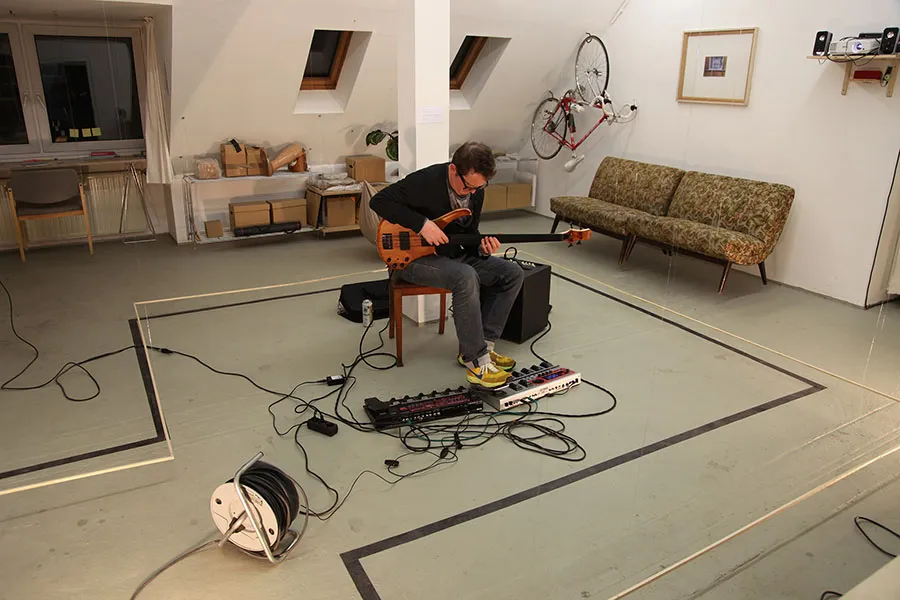
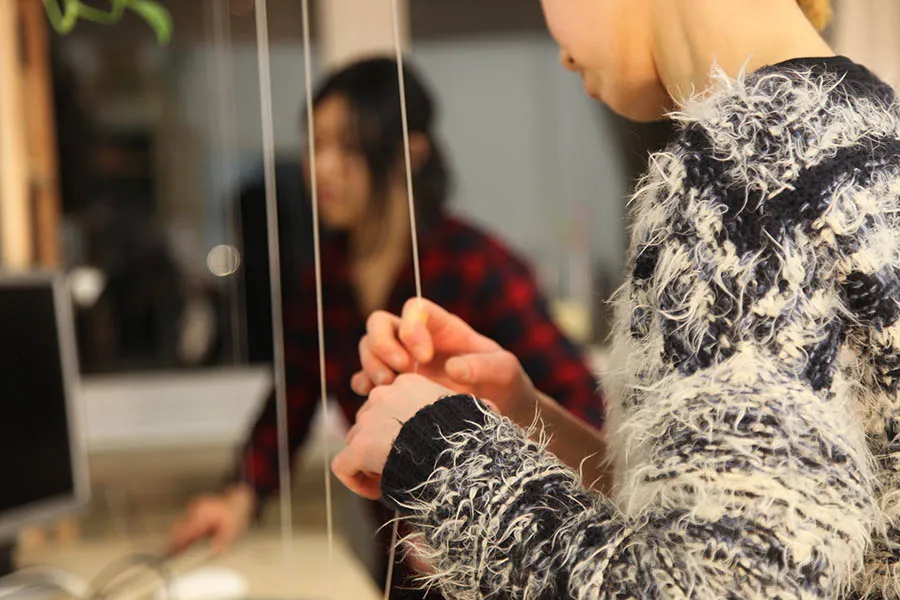
Across two performances, invited musicians improvised with the installation, plucking and bowing its lines. Because each wire differed in length, tension, and weight, each produced a distinct resonance. The furniture was no longer only seen to hover; the forces holding it in place became audible.
First performance: Markus Oeffinger, guitar
Second performance: Takahashi Marie, violin; Aki Kitajima, cello; Marco Ramaglia, piano