Relentless Images
Relentless Images responds to the archive smuggled out of Syria by the defected military photographer known as Caesar. Among 55,000 photographs documenting people who died in th Assad regiem custody. Their bodies were repeatedly photographed and assigned numerical identifiers recording the responsible security branch, detainee number, and post-mortem examination.
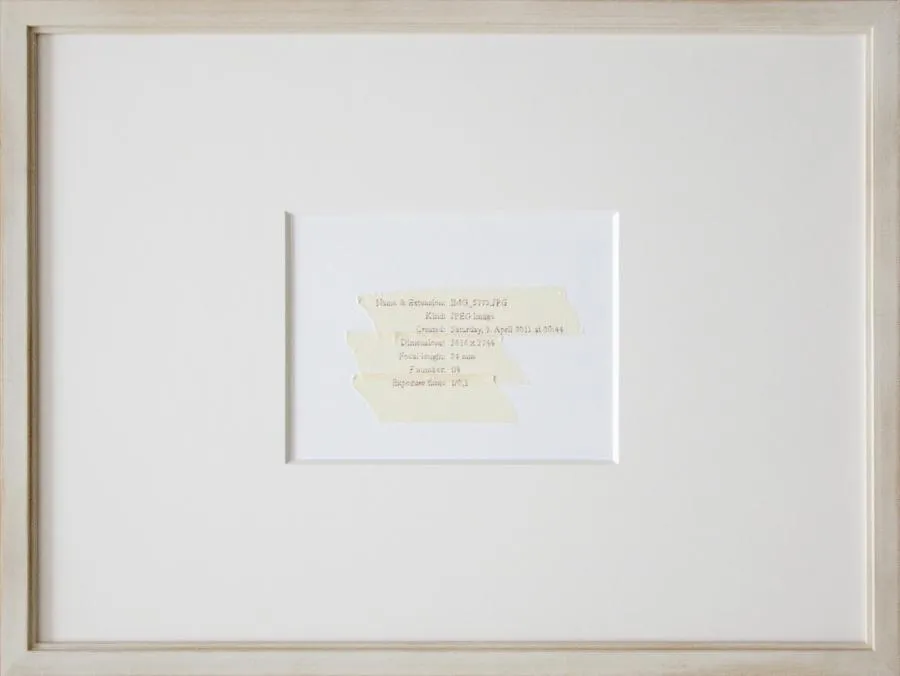
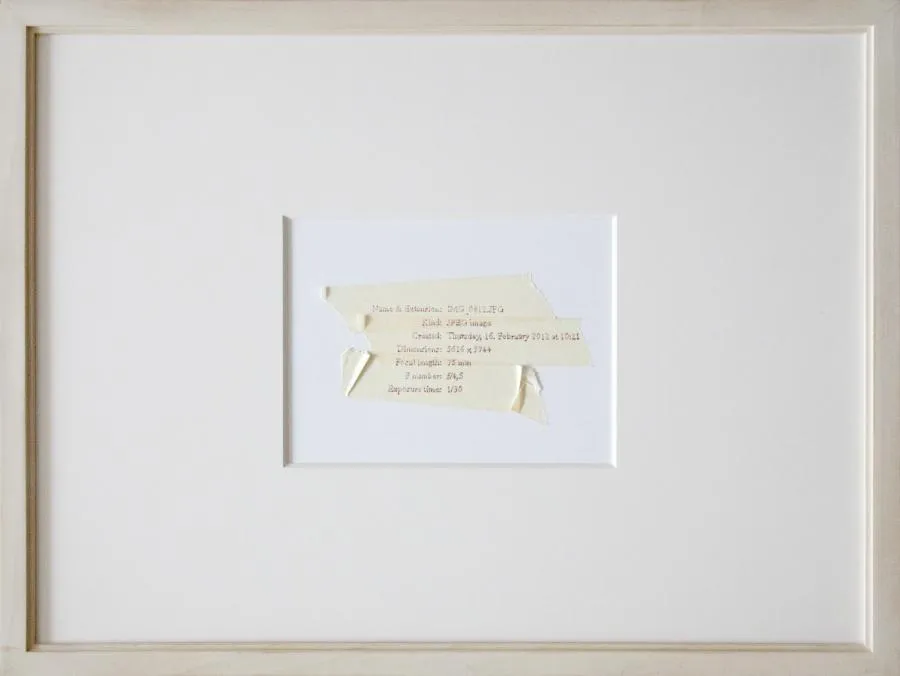
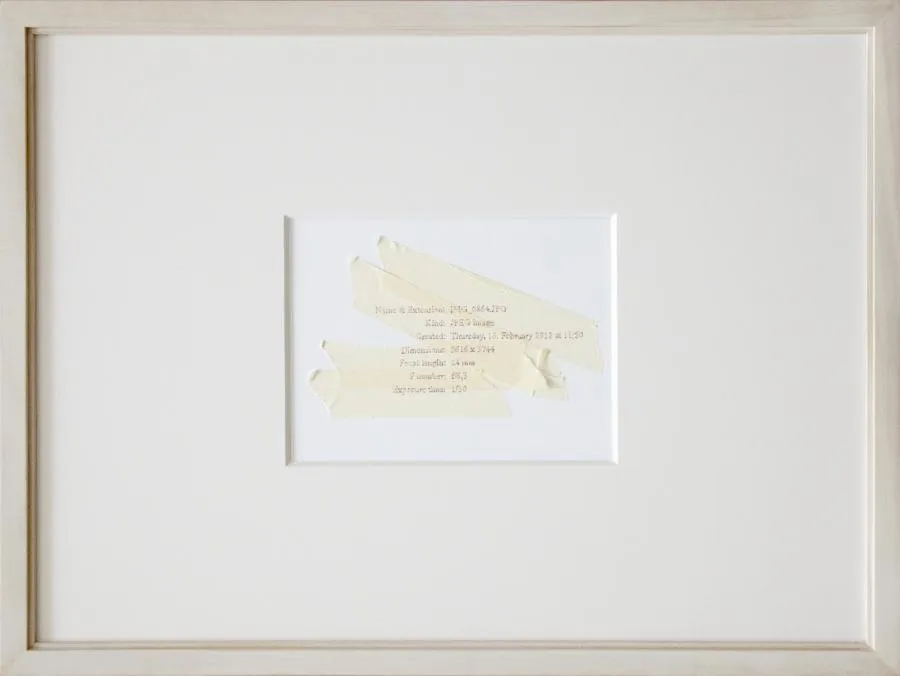
Rather than reproduce the bodies, Barakeh works with the information generated around their images. From each selected photograph, he extracts its available digital metadata—such as the filename, date, exposure, and camera settings—transcribes it by hand onto strips of adhesive tape, and photographs the resulting arrangement. The tape echoes the administrative labels visible in the source photographs, while the body itself is withheld.
Absence here is neither concealment nor forgetting. The missing body remains the structural centre of each work, while the retained data exposes the bureaucratic system that converted a person into a numbered case. By repeating the archive’s operations while interrupting its image, Barakeh implicates his own act of representation in the violence it addresses. The series refuses the false choice between exposing everything and showing nothing: it preserves the evidence while resisting the renewed circulation of violated bodies as images for public consumption.