Anatomy of Fragility
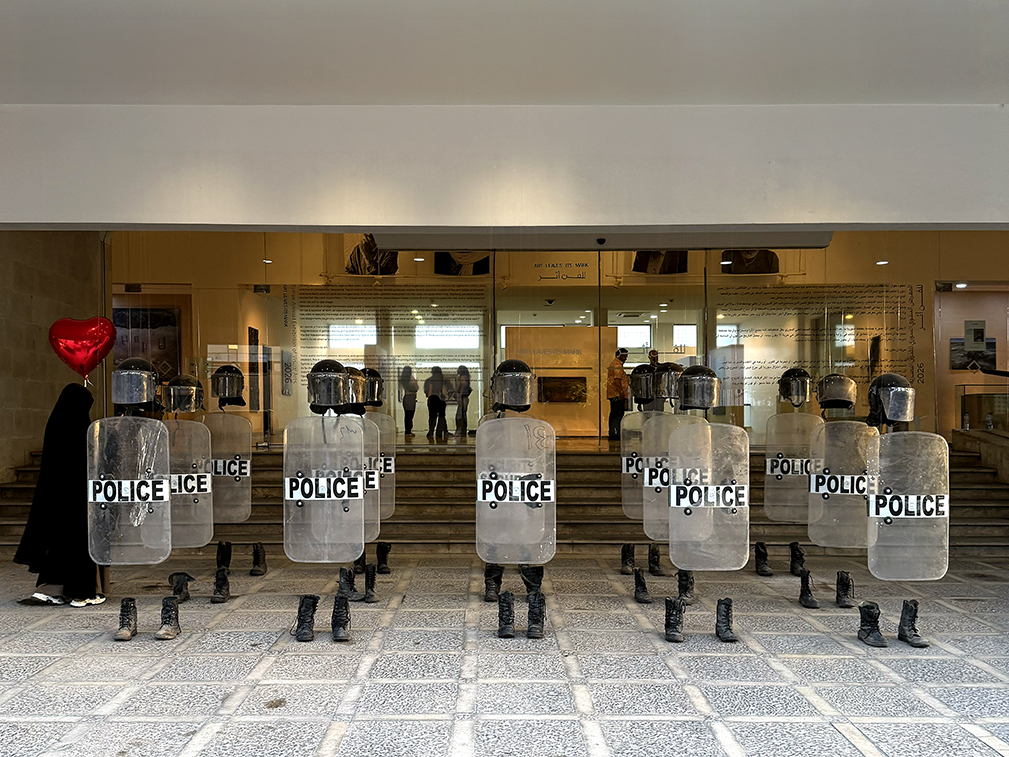
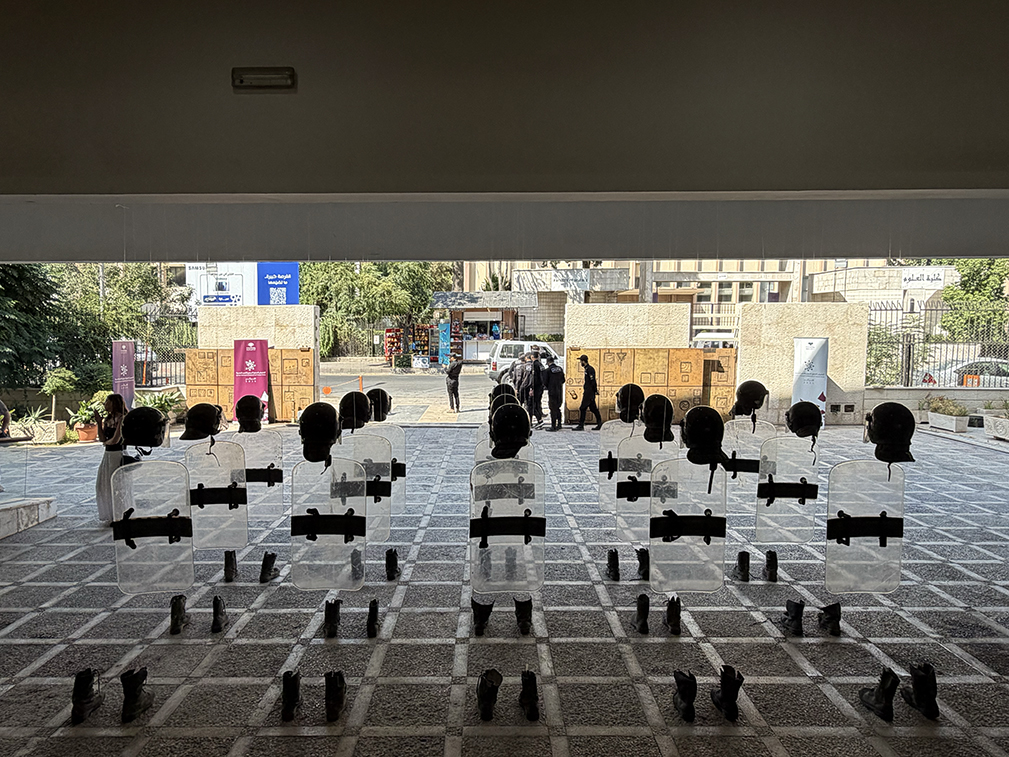
The artist rearranges riot gear found at a prison inside a former Drug Enforcement Administration headquarters into the forms of absent bodies. The equipment retains the trappings of authority that hide behind masks of power, while its emptiness reveals the fragility of its presence.
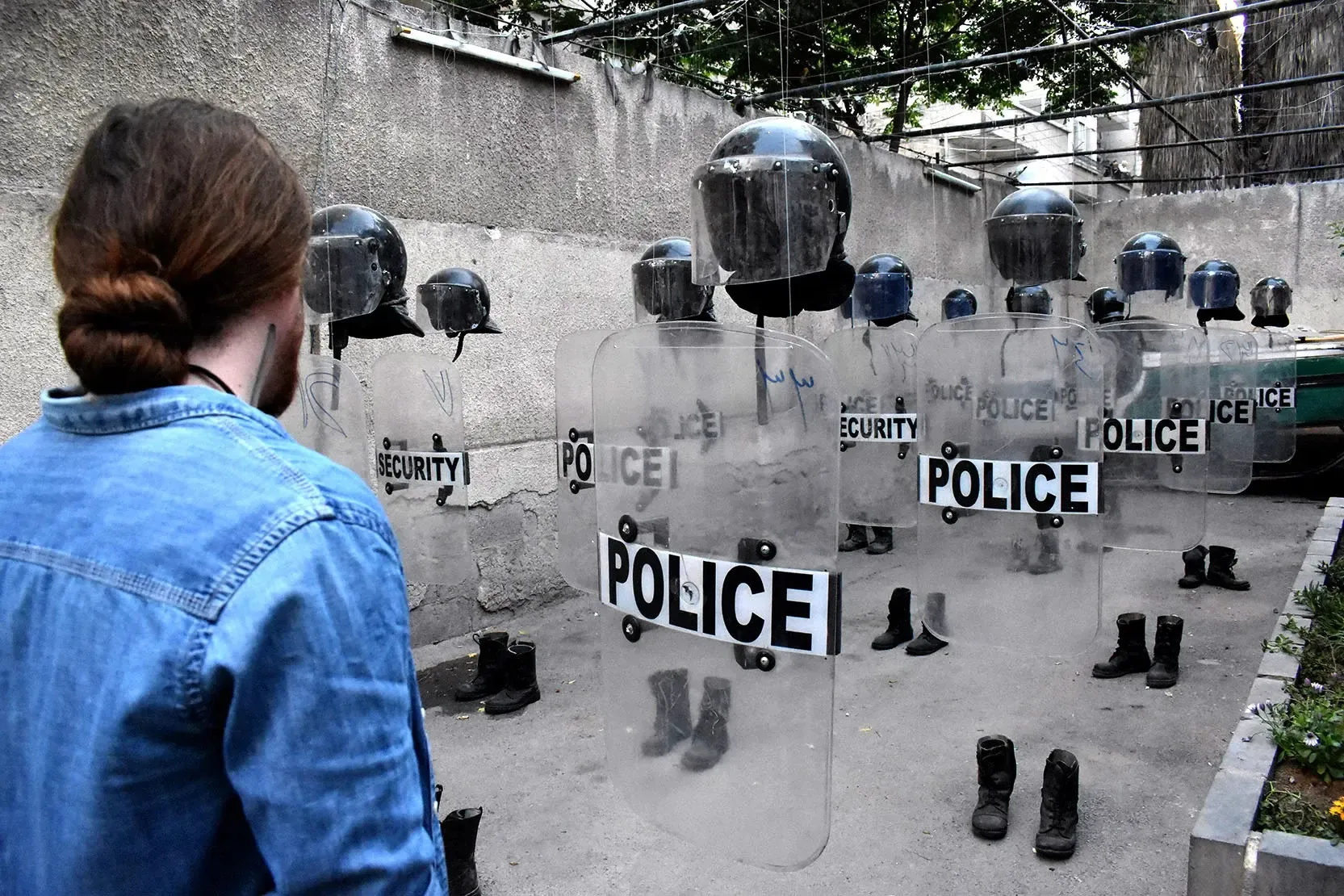
Visitors are required to walk through the arrangement to access the exhibition, navigating the same claustrophobic choreography once imposed by real security forces. This enforced passage turns the viewers’ own bodies into instruments of memory, implicating them in the tension between fear and vacancy, coercion and collapse.
By mobilising the very objects of state control as sculptural readymades, the artwork binds the installation to the material history of Assad’s rule while exposing the precariousness at its core. What remains is a tableau of authority stripped bare: a fragile architecture of intimidation that, in the moment of its disappearance, reveals its essential hollowness.