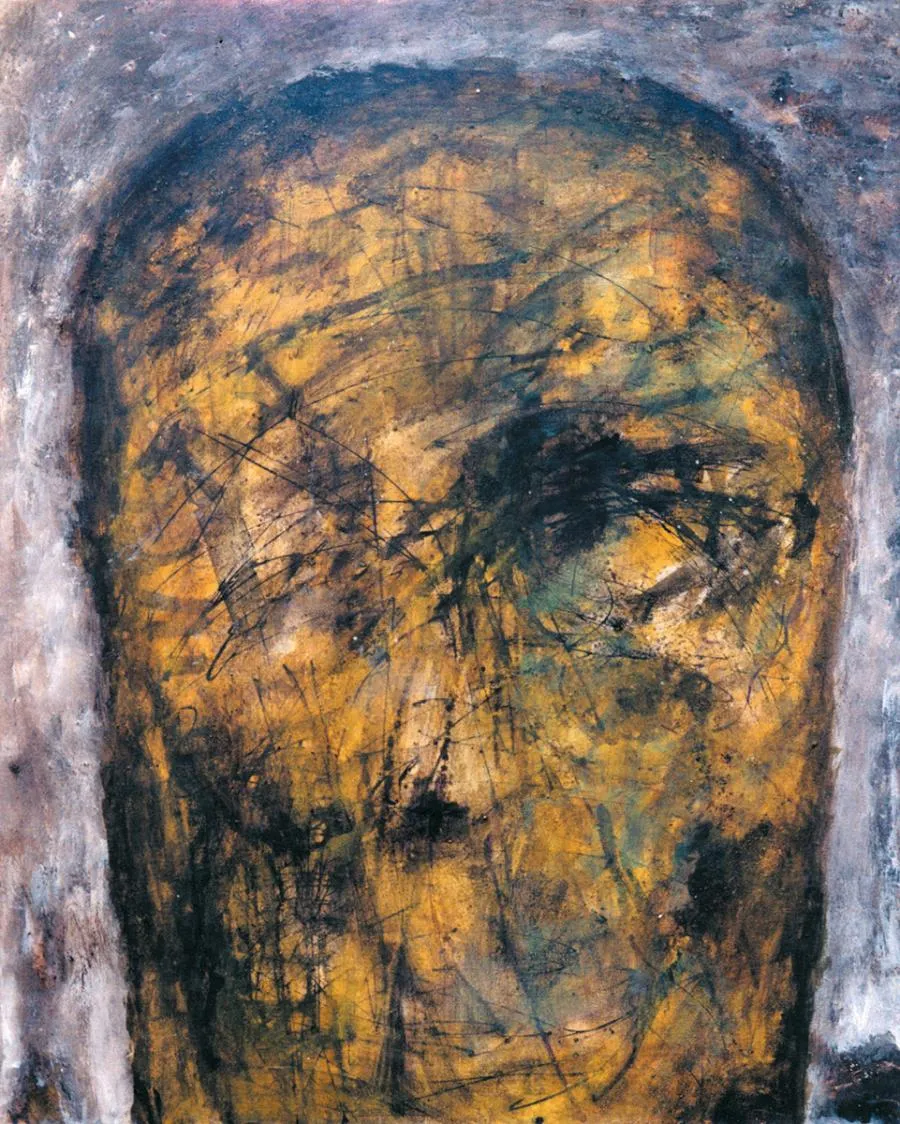
Waiting for Deliverance
Khaled Barakeh’s works emerge from an imaginative urgency: beings and figures inhabit a strange world of their own, giving form to an artistic and psychological aspiration. Working with ink, Barakeh draws inner inscriptions that resemble theatrical documents from a distant world. Within this inward realm, enveloped in silence, beings have become shrouds confined to crypts and caves without air or movement, surrounded by pale light and encroaching darkness.
Cocoons consigned to empty passageways, condemned to eternal waiting, cry out silently in an unknown world. Stripped of identity and removed from life, they inhabit a time of their own. The unearthly emptiness of these figures is a nightmare that haunts the viewer, as though the artist had condemned his beings to wait in an eternal stance—without gender or identity, amid absolute silence. They are statues without imprint or countenance, wrapped in bands of linen, as though the winds and dust of the past had erased their features. They reveal neither themselves nor their secrets. In a time measured by a clock without hands, they await deliverance, crouching or reclining in the crypts of nowhere.
Colour does not play a major role in Barakeh’s work. He generally employs a single colour and its tonal variations alongside ink. This chromatic restraint becomes a means of sharpening what the artist seeks to communicate: an expression of a private world as he perceives it. The broad fields and empty spaces of the image are coloured in pinkish brown or greyish green. Lines then form a second space, through which he weaves his beings into the pictorial field, accompanied by luminous signs dispersed across the surfaces.
Barakeh most often works on paper. Its suppleness, delicacy, and immediacy complement his artistic intention. Content and material fuse into a single unity: lines and flowing colour interweave with the pulp of the paper, and upon it the artist’s world takes form—a world without a specific time or place, except the time of waiting and deliverance.
Berlin, 2006
في انتظار الخلاص
مروان قصاب باشي
جاءت أعمال خالد بركة من إلحاح تخيّلي لكائنات وأفراد في عالم غريب خاص بها وصورة لطموح فني ونفسي.
يرسم خالد بركة بالأحبار كتابات داخلية تكاد تكون وثائق مسرحية لعالم بعيد وكائنات في عالم جواني يلفه الصمت تحولت فيه الكائنات إلى أكفان في سراديب وكهوف دون هواء أوحركة مع نور باهت وعتمة تلف المكان.
شرانق أُودِعَت في دهاليز فارغة حكم عليها بالإنتظار الأبدي تصرخ بصمت في عالم مجهول دون هوية وبعيدة عن الدنيا في زمان خاص بها.
إن فراغ تلك الشخوص لا أرضي كابوس يطارد المتلقي وكأن الفنان حكم على كائناته بالإنتظار في وقفة أبدية دون جنس أو هوية مع الصمت الكامل. إنها تماثيل دون بصمة أوسحنة ملفوفة بشرائط كتّانية وكأن رياح الماضي وغباره قد ألغت معالمها دون أن تعلن عن نفسها وأسرارها في زمن ساعته دون عقارب ينتظرون الخلاص وهم قابعون أو مستلقيون في سراديب اللامكان.
لا يلعب اللون في أعمال خالد بركة دوراً كبيراً وغالباً ما يستعمل اللون الواحد ومشتقاته إلى جانب الأحبار. أن التقتير اللوني أصبح وسيلة الفنان لتأكيد الهدف الذي يسعى إليه ويريد إيصاله إلى المتلقي. إنه تعبير عن عالم خاص كما يراه الفنان. إن السطح العام في فراغات اللوحة ملون بالزهري البني أوالأخضر الرمادي ثم تأتي الخطوط التي هي بمثابة الفراغ الثاني التي ينسج بها على فضاء اللوحة كائناته إلى جانب الإشارات الضوئية الموزعة على السطوح.
يرسم خالد غالباً على الورق كحامل للعمل الفني، وغالباً ما تأتي هذه المادة مكملة لقصده الفني لما للورق من طواعية ورهافة ثم المباشرية في التعبير، حيث يلتحم المضمون مع المادة في وحدة تتداخل فيها الخطوط وسيلولة اللون مع معجونة الورق وعليها عالم الفنان. عالم دون زمان أو مكان معين إلا زمان الإنتظار والخلاص.
برلين، 2006