The Catastrophe-Scene
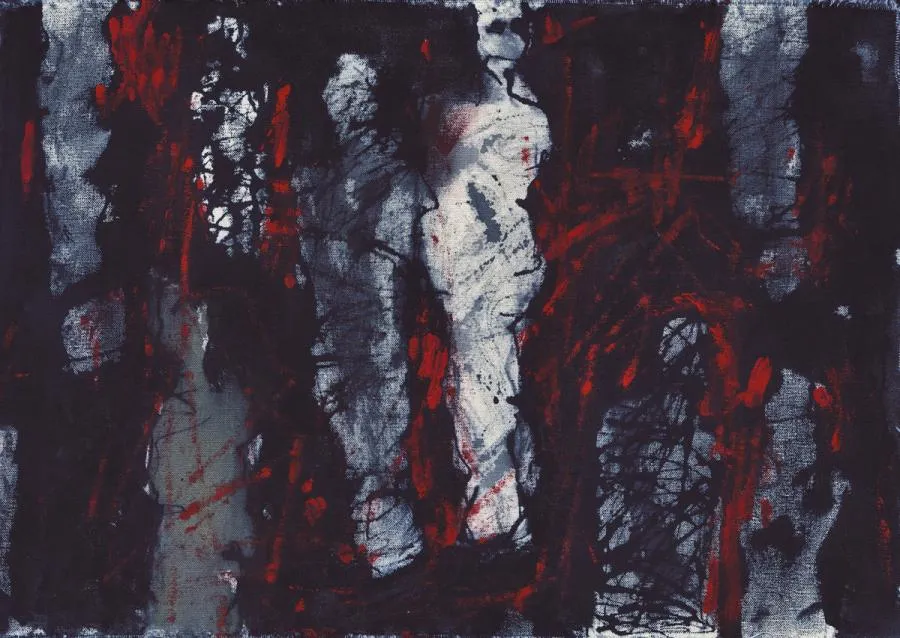
The face stands before us, stripped of its features.
A mask of devastation and sorrow.
A mask behind which death hides.
Because it portrays no particular individual, it has no need to wear that person’s features.
It stands immersed in its solitude and estrangement, belonging to no specific geography or ethnicity. It is a sign for the human being.
Its features have been dispossessed, leaving it as nothing more than a number that registers the scale of catastrophe in contemporary human life.When the body appears, it wears the shroud.
The scene begins to resemble images from the Book of the Dead, and the painting becomes closer to an object than to an easel painting.
It may be encountered on a wall, placed on the ground, or suspended in space.
Yet as soon as it assumes a position, its presence becomes more distinct. That face, that body, besieges you with anxiety and sorrow—perhaps even nausea.
Khaled’s works neither seek beauty nor sell joy.
They express a silent protest. But behind that silence lies a scream on the verge of weeping.
It is here, before the catastrophe-scene, that the image acquires its meaning and its reason for being.
Damascus, 2005
المشهد الكارثة
نذير نبعة
يقف الوجه أمامنا متجرداً من ملامح الوجه. قناعاً للفجيعة والحزن.
قناعاً يختفي وراءه الموت.
ولأنه لا يشخص إنساناً معيناً بذاته، فهو ليس مضطراً لارتداء ملامح ذلك الشخص.
يقف غارقاً في وحدته وغربته فهو لا ينتمي إلى جغرافيا معينة أو عرق ما. انه إشارة ترمز إلى الكائن البشري.
لقد استلبت ملامحه فأضحى مجرد رقم يصور حجم الكارثة في حياة الإنسان المعاصر.
وعندما يحضر الجسد فهو يرتدي الكفن.
يصبح المشهد كأنه صور من كتاب الموتى، وتصبح اللوحة أقرب إلى(الشيء) منها إلى لوحة الحامل.
يمكن مشاهدتها على الحائط، أو على الأرض أو معلقة في الفراغ.
لكنها ما أن تستقر في وضع ما، حتى يزداد حضورها وضوحاً وتجد ذلك الوجه، ذلك الجسد، يحاصرك بالقلق والحزن وربما الغثيان.
لأن أعمال خالد لا تبحث عن الجمال ولا تبيع الفرح.
إنها تعبر عن احتجاج صامت. ولكن وراء هذا الصمت صراخ يصل حد البكاء.
هنا تكتسب الصورة معناها و مبرر وجودها أمام المشهد الكارثة.
دمشق 2005